Showing posts with label Travel Tips. Show all posts

Pictures of climbing Ulsanbawi 울산바위 (蔚山岩) in Seoraksan

I thought the climb from Heundeulbawi to the base of Ulsanbawi was hard, but it was nothing compared to actually climbing up Ulsanbawi to get to the very top. Boy, was I wrong!

Everyone told me Ulsanbawi would be the most difficult course at Seoraksan National Park, but when I got to the base of the rock, it looked rather innocuous. Don't get me wrong, it was really high, but seeing so many people enjoying their picnics amongst the rocks made me momentarily relaxed. 

Base of Ulsanbawi Rock

I grew even more relaxed when I saw the red metal stairs.

Red metal stairs to Ulsanbawi

So that's it? Climbing Ulsanbawi would just be climbing some stairs? I mean, they were steep stairs, but they were stairs and not jutting rocks. I deluded myself into thinking that the climb wouldn't be so bad after all.

That feeling didn't last very long though.

Day 6: Hiking to Ulsanbawi and Heundeulbawi in Mt. Seorak 설악산

Before I get started, I just want to take a moment to wish everyone a Happy New Year. 2010 has been a tough year for a lot of people, but hopefully 2011 will bring more goodwill and prosperity. My New Year's resolution includes overcoming my fear of flying, but that goal has made it on my list every single year without being crossed off, so I have to work a little harder on that. If you have any tips for overcoming this phobia, please send them my way! I would really appreciate the help and advice.

Okay, so onto my second day in the mountains.

On the previous day, I took the express bus from Seoul to Sokcho and checked into Seoraksan Tourist Hotel. I had enough time to walk through some areas of Seoraksan National Park, hitting hot spots like Sinheungsa, Biseondae, and Cheonbuldong Valley before the sun set.

My sixth day in South Korea started with surprising un-sore legs. My feet were killing me after walking all over the place yesterday, but I woke up feeling excited and refreshed, not to mention relieved that a bug didn't crawl up my nose in the middle of the night! For breakfast, I ate some food and snacks I brought with me from Seoul and packed the rest into my backpack. I filled up my water bottle and was set to tackle one of the most difficult courses in Seoraksan National Park: Ulsanbawi Rock 울산바위 (蔚山岩)and Heundeulbawi Rock 흔들바위 (晃动岩).

The best thing about staying in a hotel that's inside the park is that I didn't have to do anything but walk out of the hotel entrance to enter the park. No bus and no fees! The weather was also great. And speaking of the weather, that's the one thing I haven't mentioned so far.

Seorsaksan Tourist Hotel 설악산관광호텔 Review

I visited Seoraksan National Park in mid-October to see the fall leaves. Everyone said you would need to spend at least 2-3 days there, so I booked a room at the Seoraksan Tourist Hotel, also known as the Mt. Sorak Tourist Hotel.

Seoraksan Tourist Hotel

Unfortunately, there aren't a lot hotels to choose from that are near Seoraksan National Park. Sokcho City 속초 (束草), a 30 minute bus drive away, has more selections but you have to think about how tired you'll be after a day of hiking and whether you'd want to take a bus or taxi just to get back to your hotel.

Even though I had to kill a wasp in my room and squash a beetle on the window, I would still stay at Seoraksan Tourist Hotel the next time I visit.

Day 4: N Seoul Tower and more

I hope everyone had a good holiday! I ate way too much and my pants are really mad at me right now. However, I've successfully recovered from my multiple food comas, so I can now return to posting with some regularity.

Day 4 Activities:
  1. N Seoul Tower 엔 서울타워
  2. Namsan Mountain 남산 (南山)
  3. Lunch at Myeongdong 명동 (明洞)
  4. Dinner with a Korean family (at their house)
My fourth day in Seoul was much more laid-back compared to the previous days, mostly in preparation for my upcoming hiking trip to Seoraksan 설악산 (雪嶽山). I kicked off the day with some breakfast at a nearby bakery (I think it was called Tres something...) before taking the free hotel shuttle to the Namsan Cable Car station.

Ibis Hotel's free shuttle service actually goes to lots of tourist hot spots. For example, we passed Gyeongbokgung 경복궁 (景福宮) on our way to N Seoul Tower. Definitely take advantage of this free transportation to save on taxi and subway fare. The only thing you have to do is to reserve a spot on the shuttle, which is actually just a van, the day before.

Driving by Gwanghwamun at Gyeongbokgung

Gyeongbokgung

Some sort of performance at Gyeongbokgung

We made several stops and I wasn't really sure where I was supposed to get off, but as long as you tell the hotel where you want to go (and double check with the driver), you will be fine. After approximately 20 minutes, we arrived at the Namsam Cable Car station.

Day 3: Driving around Seoul

Day 3 Activities:
  1. Dongdaemun Market 동대문시장 (東大門 市場)
  2. Apgujeong 압구정동 (狎鷗亭洞), Cheongdam-dong 청담동 (淸潭洞), and COEX Mall area
  3. Garosugil 가로수길 (林荫树路)
  4. Itaewon 이태원 (梨泰院)
  5. Cheonggyecheon Stream at night 청계천 (淸溪川)
  6. Myeongdong 명동 (明洞)
I originally planned to take the subway to Dongdaemun Market and the Apgujeong area, however, my good friend in Seoul offered to show me around the city. After pretty much spending all of the second day on my feet, going for a drive was a much welcomed change.

She picked me up early in the morning to hit Dongdaemun before the crowds. If you're wondering whether you should go to Namdaemun Market 남대문 시장 (南大門 市場) or Dongdaemun Market (that is, if you don't have time for both) please read my more detailed post about Dongdaemun here.

From what I read online, I knew Dongdaemun Market would be big, but I didn't know it would be that big! There were so many malls, markets, and little stores, it was definitely overwhelming. You can bargain down prices, but you're not allowed to try on most things. Ask anyway because the shopkeeper just might be in a good mood! Things were actually more expensive than I expected them to be (maybe I was looking in the wrong places?), but I still found a sweater and some leather bracelets.

Sweater bought at Dongdaemun Market

Because I didn't have that much time, I only went to Jeil Pyeonghwa 제일평화시장 and Doota 두타.

Shopping at Jeil Pyeonghwa

Jeil Pyeonghwa resembled a warehouse attic (it's more for ladies 30 and older) and Doota (very fashion forward) was like a Forever 21 on crack.

Visiting Dongdaemun Market 동대문시장 (東大門 市場)

I only had time to visit one big market in Seoul and it was between Dongdaemun Market and Namdaemun Market 남대문 시장 (南大門 市場). Namdaemun is known for a being a tourist place, while locals tend to flock to Dongdaemun. Namdaemun actually reminds me of the Liuhe Night Market (六合夜市) in Kaohsiung, Taiwan.

If you ever visit Kaohsiung, everyone will tell you that you have to go to Liuhe Night Market. However, if you live there, like I do, you tend to skip it because it's always chock full of tourists. Being such a tourist hot spot has sapped the night market of its local charm. That's the way I felt about Namdaemun Market, so I chose to go to Dongdaemun instead. This decision was also reinforced by my Korean friend, who told me that Namdaemun leans towards food and kitchen things, whereas Dongdaemun is the place to go if you want to shop for clothes and accessories.

Dongdaemun Market is not so much a market as it is a commercial district full of shopping centers. It's divided into two sections: Section 1 (the left side of the below map) is where most of the malls (Doota, Migliore, and Hello apM) and retail stores are located. Section 2 (the right side of the below map) is where most of the wholesale shops are located. The stores here also sell things at retail, but they mostly deal with bulk sales. Since there are sports stadiums in Dongdaemun, there is also a good selection of sporting goods.

Dongdaemun Market Map, from Korea Hotel Reservations

I hitched a ride from a friend to Dongdaemun Market and the drive from Hotel Ibis in Myeongdong took around 25 minutes because of all the traffic lights. Alternatively, you can take the subway. From Hotel Ibis, you can walk to the Euljiro 1-ga Subway Station and take Line 2 (green) to the Dongdaemun History & Culture Park station (3 stops away). Here, transfer to Line 4 (blue) and get off at the next station, Dongdaemun Station. The entire commute should take around 13 minutes and cost 1000 won, according to Seoul's SMRT website.

Subway directions to Dongdaemun Market

When we finally arrived, I was shocked at how much shopping you could do here. Dongdaemun Market is so big and there are so many stores, you could easily spend 3 days here and only see a fraction of the place. Boy was I glad I was with a local! I only went to two "malls", Jeil Pyeonghwa 제일평화시장 and Doota 두타, and I didn't even feel like I skimmed the surface of shopping.

One thing's for sure, if you're going to shop at Dongdaemun, set aside a lot of time and bring a lot of money. I was under the impression that since there were lots of wholesalers at Dongdaemun, everything would be pretty cheap, but that was not my experience. I'm not sure if it was because we were a little rushed and didn't explore every nook and cranny, but prices at Dongdaemun could easily rival those at my local Macy's. Of course the styles are different and the selection is great, but it was still more expensive than I expected.

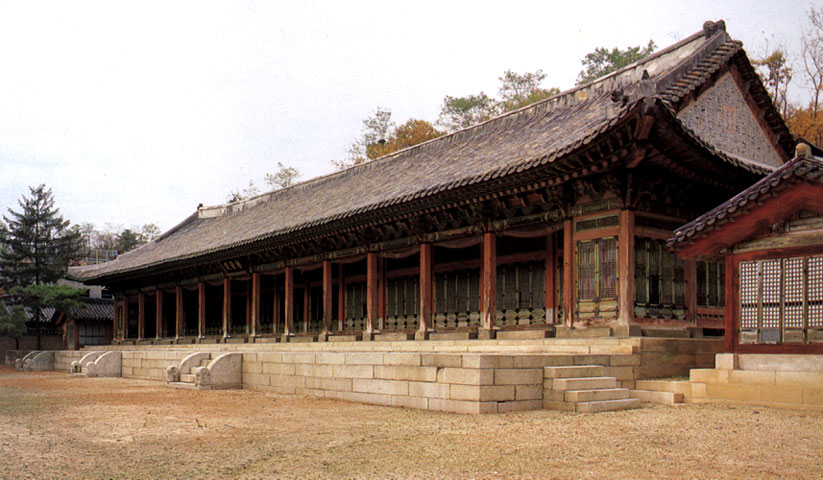
20 Things to See at Changdeok Palace 창덕궁 (昌德宮)

Changdeokgung map

I'm just typing out the places to visit at Changdeokgung 창덕궁 (昌德宮) so it will be easier for you guys to see, especially if you are planning a self-guided tour. The above picture was scanned from a pamphlet I brought back with me after my visit to Korea.

20 Things to See at Changdeokgung:
  1. Donhwamun 돈화문 (敦化門) - the main entrance gate to Changdeokgung
  2. Injeong-jeon 인정전 (仁政殿) - where coronation and congratulatory ceremonies were held
  3. Seonjeong-jeon 선정전 (宣政殿) - where the King met daily with his ministers, the one with the blue roof tiles
  4. Huijeong-dang 희정당 (熙政堂) - also spelled Heejeongdang, this was a council room for the King
  5. Daejojeon 대조전 (大造殿)  - the King's bedroom, where King Sunjong died
  6. Seongjeong-gak 성정각 (宣政角) - court doctor's main area
  7. Gwolnaegaksa 궐내각사 (闕內各司) - administrative building
  8. Seonwon-jeon 선원전 (璿源殿) - shrine for former Kings' portraits
  9. Nakseon-jae 낙선재 (靻鉏豏) and vicinity - a living place for royal concubines (on Fri, Sat, and Sun)
  10. Sangnyang-jeong and vicinity - pavilions
  11. Buyongji 부용지 (芙蓉池) and Juham-nu 규장각 (奎章閣) and vicinity - a rectangular pond and pavilion in the Biwon gardens; Juhamnu is a library (first floor stores books, second floor is a reading room)
  12. Aeryeonji 애련지 (愛蓮池) and vicinity - a beautiful lotus flower pond and pavillion
  13. Yeongyeong-dang 연경당 (演慶堂) - a building modeled after a gentleman's private residence
  14. Jondeok-jeong 존덕정 (尊德亭) and Gwallamji 관람지 (觀纜池) and vicinity - a hexagonal shaped pavilion and a fan-shaped pavilion and pond
  15. Ongnyucheon 옥류천 (玉流川) and vicinity -a stream in the inner most part of Changdeokgung
  16. New Seonwon-jeon 새선원전 (璿源殿) - where former King's portraits were enshrined
  17. Chinese scholar trees - Trees at the front entrance. Some of these are 300-400 years old. Scholars used to congregate here 
  18. Juniper
  19. Mulberry Tree
  20. Chinese gooseberry tree

8 Days in South Korea

It's been a month since I returned from my trip to South Korea and I just now finished uploading all the pictures I took. I spent 4 and a half days in Seoul, 2 and a half days at Seoraksan National Park, and then one more day in Seoul before flying home.


Overall, I had a really great time. Since this trip was just a cursory introduction to South Korean life, I definitely plan to visit it again in the future. I brought back lots of maps and brochures to share with you guys, so check back in the next few days as I update with more detailed posts.

For now, here are my 7 general reflections of South Korea (mainly Seoul):
  1. Traffic is really bad. Seriously, if you plan on driving or taking the taxi, prepare yourself to be stuck in the car for longer than expected. Traffic is especially bad near the Myeongdong area and it seemed to be like that for the whole day, rush hour or not. So even though basic taxi fare is cheap (compared to Japan, Taiwan, and China in my experience), if you are going to use taxis for the majority of your transportation, remember to factor in bumper to bumper time.
  2. You don't have to know how to speak Korean to travel by yourself in Korea. If you plan to be in Seoul, you don't really need to know much Korean, as long as you know English. Of course it will help a lot to know some Korean phrases, but Seoul is very westernized and most signs are in both English and Korean. I do think it's a good idea to familiarize yourself with basic Hangul, that way you can at least read Korean even if you don't know what it means. It'll make it easier to spot shops when their names aren't written in English. Even if the shopkeeper doesn't speak any English, chances are someone nearby will know how to speak it. Just ask around. I'm sure you will be able to find a willing translator. Most shops and restaurants, especially in the touristy areas, can handle basic phrases though. And if no one knows how to speak English, there are a bunch of very convenient, helpful, and free Tourist Information booths scattered around the city. However, when I went to Seoraksan in Sokcho, barely anyone knew any English. So if you are venturing to less urbanized areas, a Korean phrasebook will be your best friend. I actually had my friend send me some handy Korean phrases to print out and show to bus drivers, ticket booths, etc to make sure I was going the right way.
  3. Things in Korea cost more than you think, especially fruit. Before I went to Korea, I was under the impression that everything there would be cheap. Cheap clothes (as in around $10-$20), cheap souvenirs, and cheap food (as in around $1-$3)! But, alas, that was not the case. I'm sure you can find really inexpensive things, like near the universities, but the trade off is poorer quality. I'd rather pay a bit more for clothes that will last longer or for food that is prepared in a more sanitary environment than save a few bucks. Then again, maybe I didn't go to the local watering holes. Or maybe I am just picky? Expensive or cheap is relative though... We'll see when I visit next year and do more exploring!
  4. Shopping is absolutely overwhelming. If you are a woman (or love to shop), you will be in heaven. If you are a man (or hate to shop), you will be in hell. For me, I was in heaven. My eyes lit up at all the trendy styles and rhinestone encrusted accessories. Then 30 minutes later, the huge crowds and overwhelming amount of selection gave me a headache and sent me straight to hell. The thing is, if you are visiting Korea for the first time, your time will be split between sightseeing and shopping. You can't do everything at once and shopping will for sure take a few hours. If you do plan to go shopping, make sure you decide which places you want to shop at before you go. You don't have to hit all the department stores or all the shopping areas. More often than not, they will have the same stores. Dongdaemun market is the best for the most "a little bit of everything" shopping. Also, it's a good idea to make a list of potential things you want to buy, so you don't waste your shopping time doing a whole lot of aimless wandering.
  5. Food tasted pretty similar everywhere in Korea. I was expecting food in Korea to be really good since, in Korea, bulgogi has got to be more authentic than the bulgogi at the Korean restaurant I frequent in Houston right? Well, either that restaurant serves some really authentic food to begin with or my expectations were just too high. Don't get me wrong. I love Korean food and found food in Korea to be absolutely delicious. It just didn't blow me away like I thought it would. Take Gogung Restaurant, for example. Gogung in Seoul is famous for their Jeongju bibimbap, but honestly, I thought it tasted more or less the same as the bibimbap I had at other places. I actually think the dolsot bibimbap in Taiwan tasted better than the dolsot bibimbap in Korea. Maybe because Taiwanese food focuses on more intense flavors? Or it could be that Taiwanese food is always served hot (temperature-wise), while food in Korea was often just warm. For me, hot food tends to take mediocre food to the next level and since it was kind of chilly when I visited in October, hot food and hot soup would have made my belly much happier. Kimchi, however, is hands-down the best in Korea.
  6. You won't be running into any celebrities. My dream of meeting Rain, him doing a double take and then instantly falling in love with me, unfortunately, did not come true. Unless you mean billboard ads, you will be hard-pressed to run into any Korean celebrities, even though they all live in Seoul. I read online that the best place to meet Hallyu stars was at the Apgujeong and Gangnam area, but I didn't spot anyone famous there. Not that I was doing any stalking or anything... Alternatively, you can wait outside recording studios like KBS or entertainment companies like SM, but it seems like there'd be better things to do while you're in Korea than wait for a K-pop star to maybe or maybe not show up. If you can't meet them in person, at the very least, you can get your fill by buying their photo books, picture cards, and other memorabilia. SM Entertainment has a whole store in Myeongdong devoted to promoting Girls' Generation, Super Junior, and SHINee!  
  7. Seoul is very East meets West. It's an indescribable feeling to be sandwiched simultaneously between two cultures and two time periods: East meets West and Old meets New. I really liked how in Korea, there would be a huge row of skyscrapers and then nestled in between them would be an old temple or something. Or how some places would add cheese to their tteokbokki or kimchi to their pizza. It's also interesting to see Asian architecture and Asian statues dotted around such a modern city. I don't think you can find any other place that is as unique in this aspect as Seoul. Since I grew up in the States and now travel back and forth between the States and Asia for work, it was especially surreal to experience such a collision of cultures and time periods.

    LinkWithin